Horse Country · Column No. 1 - CALIFORNIA
California: The Golden State

Santa Ynez, CA
Ask any Californian what it's like to keep horses here, and you'll get a completely different answer depending on where they live. That's not a contradiction... that's California. A state so enormous and so geographically varied that it contains virtually every climate on earth, sometimes just miles apart (known as "microclimates"), within its borders. Beaches. Redwood forests. High desert. Low desert. Lush grasslands. The snowcapped Sierras. The fog-drenched Central Coast. It's not a one-horse state. It's half a dozen of them stacked together, and somehow it all works. California's relationship with the horse runs deeper than most people realize.
Long before the show circuits and the polo fields, horses arrived here with the Spanish missionaries in the late 1700s, and the vaquero tradition that followed became the foundation of Western horsemanship as we know it across the entire country. The "californio" ranchers of the 1800s were considered among the finest horsemen in the world — their horsemanship was precise, patient, and deeply tied to the land. That lineage is still alive in California today, woven into the DNA of the reining, cutting, and cow horse culture that thrives here. When you watch a California horseman work cattle on an oak-studded hillside, you're watching something that has been handed down for 250 years.
That's what makes California one of the most extraordinary places in the world to be a horse person.
Region 1
Southern California: Sun, Sand, and Year-Round Saddle Time

Santa Catalina Island, Avalon, CA
Southern California is what most people picture when they think of California, and they're not wrong. The climate here is the stuff of equestrian dreams. Mild winters, warm summers, and enough sunshine that the question isn't whether you can ride today, it's whether you remembered your sunscreen and something to keep you cool.
The equestrian infrastructure in SoCal is world-class. The San Diego area, particularly Rancho Santa Fe and Ramona, boasts some of the most beautiful private facilities in the country. Orange County and the Inland Empire have dense riding communities across disciplines from hunter/jumper to reining to Western trail. Even Catalina Island has horses, with the most stunning ocean views you'll ever see from the trail.
And then there's the desert. Coachella Valley has quietly become one of the most significant equestrian destinations in the United States. The Desert International Horse Park in Thermal hosts its prestigious Desert Circuit each winter, drawing top competitors from around the world who come specifically to escape the cold and ride in perfect conditions. It's no accident that the desert has become the winter home of serious show horses, because the footing is good, the weather is reliable, and the scenery doesn't hurt. Yes, the summers can be brutally hot, but horses that live here acclimate surprisingly well, so long as you provide them ample shade and water, and you don't drop them off here mid-July from somewhere cooler.
The desert is also home to world-class polo at the Eldorado Polo Club in Indio, CA. Players and teams from all over the country (and the world!) will relocate to the desert for the winter season, which runs from December through March, to compete in leagues of all levels across 15 on-site fields, and even more nearby. Spectators can enjoy Sunday polo from the clubhouse patio with full service restaurant and bar, or a field-side tailgate spot, and a view of the snow-capped mountains that's not too shabby either. There's even a restaurant open to the public right on the property that's open Tuesday through Sunday that serves breakfast, lunch and dinner to players, guests and visitors.
Indio and Thermal are truly a horseperson's paradise!

Eldorado Polo Club, Indio, CA
The Desert Rodeo in late April (same weekend as, and just 15 minutes away from the Stagecoach Music Festival!) is already making its mark. In just its second year, it's already growing fast, bringing a Western energy to the valley that feels entirely at home here. Watch this one.
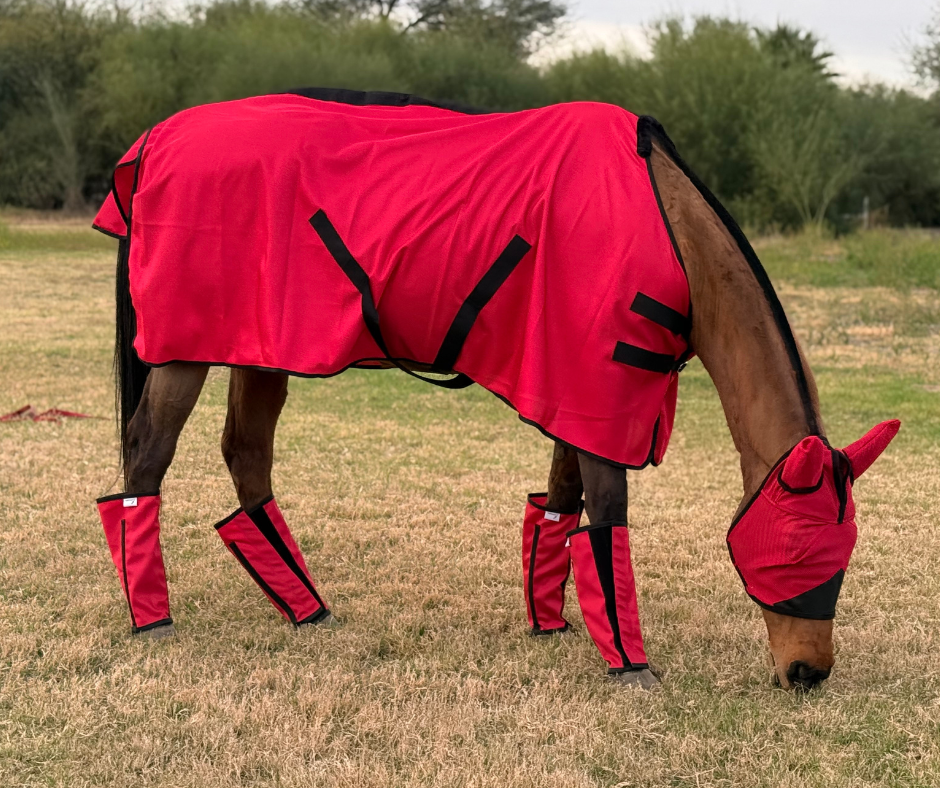
Desert horse owners take note: The fly season here is long — longer than most of California, and longer than most horse owners coming from other regions expect. The warm winters mean fly populations never fully die off, and by spring you're in full boot-and-mask season. Fly protection isn't optional here — it's a year-round discipline.
Region 2
The Central Coast: Beautiful, Verdant, and Occasionally Very Wet

Beach Ride with Central Coast Polo, San Luis Obispo, CA
The Central Coast — Santa Barbara, San Luis Obispo, the Santa Ynez Valley etc. is California horse country at its most cinematic. Rolling golden hills, oak-dotted pastures, vineyards in the distance. The Santa Ynez Valley in particular has one of the most concentrated equestrian communities in the state, with a strong polo presence, active trail riding culture, and the kind of property that makes non-horse people suddenly reconsider their life choices.
The riding here is exceptional. Miles of varied terrain (including the beach!), moderate temperatures, and a lifestyle that genuinely revolves around horses.
The caveat is mud. El Niño years bring serious rainfall to the coast, and with that comes flooded turnouts, slick trails, and the kind of mud that eats boots. Coastal riders also have to be mindful of landslides, particularly after heavy rain seasons, on trail routes that cut through hillsides. The payoff for those wet winters is the lush green landscape that follows, and the dramatic coastal trails that are, frankly, unmatched anywhere in the world. Beach riding is not only possible here, it's a rite of passage.
Region 3
The Sierra Nevadas: Majestic, Seasonal, and Home to Wild Horses

Pulling a Christmas Tree, Eastern Sierras, CA
The Sierra Nevada is its own world. High meadows, granite peaks, pine forests, and in certain areas, genuine wilderness riding that feels like stepping back in time. The Eastern Sierra and surrounding regions also happen to be home to something remarkable: wild horses.
California's wild horse populations, managed under federal jurisdiction, roam the high desert and grassland areas east of the Sierra. Watching a band of mustangs move across open range is one of those experiences that reminds you why you fell in love with horses in the first place.
But Sierra horse life comes with real seasonal considerations. The snowpack in the Northern Sierra can be staggering — deep enough to strand horses that aren't moved to lower ground in time. Many horse owners in these areas maintain seasonal arrangements, moving their animals to lower elevations when winter sets in and bringing them home when the meadows reopen. It's a rhythm that requires planning, but for those who do it, the summers at elevation are worth everything.
The trail riding in the Sierra, particularly in and around national forests and parks, is some of the finest in North America. For the endurance rider, the backcountry explorer, or anyone who wants to cover serious ground on horseback, this region has no equal. The legendary Tevis Cup — 100 miles through the Sierra in a single day — runs right through this terrain.
Region 4
Northern California: Wine Country, Grasslands, Rain, and Real Horse Country

Petaluma, CA
Northern California, from the Sacramento Valley north and west, through the coastal ranges and into the hill and wine country, is where California's ranching and working horse culture has the deepest roots. Quarter horses, cattle, and wide open land. This is where the cowboy hat isn't a fashion statement.
The climate here is wetter than Southern California, with genuine winters that bring cold, rain, and occasionally frost. It won't freeze your water troughs like Minnesota, but it's a different proposition than riding in Thermal in January. Grass pasture management becomes more complex, and mud management is a real part of the job.
That said, the grasslands of Northern California are spectacular, and the riding culture here, which is rooted in ranch work and cattle competition, is some of the most authentic in the West. Take a ride through these historic lands, and don't forget to stop for wine!
What California Gets Right — For All of Us
The riding season in California is, for most of the state, effectively year-round. That is an extraordinary gift that horse people in colder climates genuinely don't get, and it's easy to take it for granted if you've always lived here. Even if you live in the very cold and snowy Sierras, it's just a short drive down in elevation where you'll find the weather to be much more tolerable. In almost no other state can you experience snow and "summer" in the same day, just miles apart. All thanks to the high elevation and low latitude.
The variety of disciplines is unmatched anywhere in the country.
Polo? World-class, from the desert to the coast. Hunter/jumper? Some of the top circuits in the nation run here. Reining, cutting, and cow horse? Deep roots and serious competition. Endurance? The famous Tevis Cup runs right through the Sierra. Western pleasure, dressage, eventing, barrel racing — it's all here, and it's all well-represented.
California is also a magnet for elite trainers, breeding operations, and international talent. The concentration of horsemanship at the high end of the sport is remarkable, and it creates an environment where even a weekend amateur benefits from proximity to excellence.
The Hazards — Let's Be Real
No honest account of California horse life leaves out the realities.

A horse watches the flames in Ojai, CA
Rattlesnakes are the primary trail hazard. They're real, they're present in most of the riding terrain across the state, and experienced California trail riders develop a healthy awareness of rocky outcroppings, brush piles, and warm days when snakes are active. Most horses encounter them eventually. Most encounters end uneventfully. It's something you learn to watch for rather than fear.
Earthquakes are an inherent risk in California. The good news is that the greatest risk is posed to horses who live indoors. A large portion of California horses live in turnout 24/7, or in pipe corrals, all of which are much safer for horses in the event of an earthquake. Large cracks can form in the ground during an earthquake, but they're rare — much rarer than falling buildings.
Wildfire and smoke is the hardest truth. In recent years, fire season has become a genuine consideration for California horse owners in a way that previous generations didn't face. Evacuation planning, air quality monitoring, and knowing your horse trailer situation is part of responsible horse ownership here now. The communities that have managed this well are organized, prepared, and look out for each other. But it's worth naming honestly.
Know Your Regional Hazards
- Desert: extended fly season year-round — boots, masks, and fly sheets are non-negotiable
- Coast: mud, flooded turnouts, and landslide-prone trails after heavy rain
- Sierra: deep snowpack requiring seasonal horse management and relocation planning
- Statewide: rattlesnakes on trail — learn to watch for them, not fear them
- Statewide: wildfire evacuation plan, trailer ready, air quality alerts on your phone
- Statewide: earthquake risk — pipe corrals and open turnout are significantly safer than stall barns
The Bottom Line
California horse life isn't easy — no horse life is — but it offers something that's genuinely hard to find elsewhere: variety, community, world-class competition, and landscape so beautiful it makes the work feel like privilege rather than labor.
You can ride through redwoods in the morning and work cattle on open grassland in the afternoon. You can compete at an internationally recognized show in January and trail ride along the Pacific in February. You can watch wild horses run in the Sierra and polo matches in the desert, sometimes in the same week. You can even take a trail ride right in the middle of Los Angeles, and get a glimpse of the Hollywood Sign.
It's not one thing. It's everything.
That's California horse country. And for those of us lucky enough to live it, there's nowhere else we'd rather be.

A trail ride through Griffith Park, Los Angeles, CA
Next column: The desert equestrian life — why serious riders are making the Coachella Valley their year-round home.